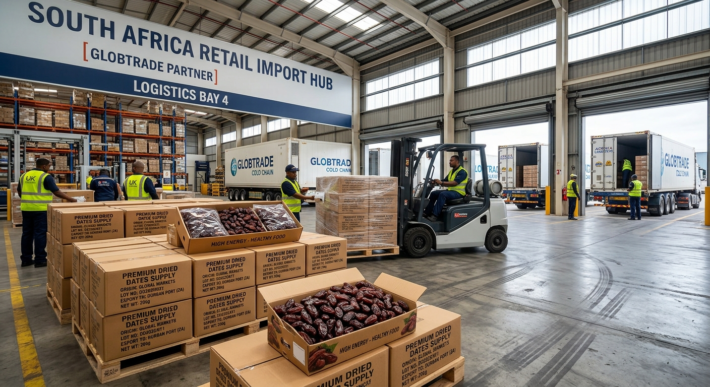
Australian Medjool Date Import 2026: Urgent 5-Step Essential Guide

An urgent Australian Medjool Date Import 2026 procurement tender has been officially issued by a premier Australian food wholesale, import, and retail distribution conglomerate specializing in specialty international food and beverages. This high-priority B2B commercial opportunity focuses on sourcing high-quality Middle Eastern and Levantine Medjool dates with a flexible mix of fruit sizes and weights for distribution across retail outlets and specialty stores. International agricultural suppliers, packing facilities, and exporter cooperatives are invited to submit initial shipments for comprehensive quality evaluation and door-to-door sea freight logistical verification. Accredited growers are urged to leverage this pivotal window to establish recurring supply contracts across Australian distribution networks.
This procurement drive under the Australian Medjool Date Import 2026 framework is strategically designed to optimize cost structures and meet surging consumer demand during peak consumption periods such as Ramadan and holiday seasons. The primary objective of this program is to lower average per-unit costs by incorporating a balanced mix of fruit weights (19–22 grams) and utilizing cost-effective door-to-door maritime freight solutions. Upon successful validation of initial shipments, selected suppliers will be formalized and prioritized for long-term supply contracts featuring flexible, trader-friendly, and attractive commercial payment terms. This initiative enables Australian importers to establish a competitive pricing structure suitable for diverse retail segments while securing a stable, high-volume flow of premium dates for central warehouses in Sydney, Melbourne, and Brisbane. Accredited suppliers must act immediately, as the official procurement communication and submission window is strictly open from October 1, 2026, to December 15, 2026.
Market Dynamics: Australian Medjool Date Import 2026 Demand Drivers
Major Australian retail chains, specialty Middle Eastern grocers, and commercial food distributors require steady, high-volume deliveries of Grade A dates to maintain continuous operations and a dominant market presence. Participating in this procurement campaign via the Australian Medjool Date Import 2026 program enables international agricultural partners to establish a profitable commercial footprint across Oceania’s most demanding retail supply networks.
Core Procurement Metrics & Tender Specifications
| Sourcing Parameter | B2B Commercial & Technical Details |
| Commodity Requirements |
Premium Medjool Dates (Mixed Sizes & Weights: 19–22g) |
| Key Quality Indicators |
Moisture Balance, Skin Separation Benchmarks, Zero Infestation |
| Logistics Model |
Door-to-Door Sea Freight / FCL Reefer Shipping |
| Destination Hubs |
Sydney, Melbourne, and Brisbane Wholesale Terminals |
| End Markets |
Supermarket Chains, Specialty Grocers, Foodservice Outlets |
| Procurement Window |
October 1, 2026 – December 15, 2026 (Urgent Action Required) |
| Compliance Standards |
DAFF Biosecurity Regulations, HACCP, GlobalG.A.P., FDA Guidelines |
5 Steps to Execute Under the Australian Medjool Date Import 2026 Tender
Global agricultural producers, sorting facilities, and international trade enterprises seeking to supply Australian distributors must align their post-harvest, processing, and laboratory verification protocols with strict Australian biosecurity standards.
1. Comply with Australian DAFF Biosecurity Directives
Successfully executing Australian Medjool Date Import 2026 shipments without customs clearance delays mandates strict adherence to the Australian Department of Agriculture, Fisheries and Forestry (DAFF) biosecurity protocols. Each consignment must be accompanied by valid Phytosanitary Certificates issued by national food safety authorities, certificates of origin, and pest-free declarations compliant with international benchmarks monitored by the U.S. Food and Drug Administration (FDA).
2. Verify Rigid Quality, Sizing, and Caliber Benchmarks
Australian produce importers enforce precise physical standards for incoming imported date shipments:
-
Weight & Calibration: Strict adherence to the 19–22 gram per fruit weight specification to ensure uniform packaging density and unit cost efficiency.
-
Appearance & Texture: Clean, intact skin with minimal loose skin percentage (skin separation < 10%), rich mahogany color, and optimal flesh moisture balance.
3. Maintain Cold Chain Integrity and Maritime Logistical Verification
Preserving date quality during long-distance maritime transit mandates rigid reefer temperature and humidity management:
-
Storage Environment: Continuous refrigerated container transit conditions (0°C to 4°C) with controlled humidity levels to prevent fermentation, sugaring, or mold growth.
-
Microbial & Pest Safety: Validated Certificate of Analysis (CoA) confirming zero live insect infestation and total compliance with Maximum Residue Limits (MRLs).
4. Deploy Durable Door-to-Door Packaging and Palletization
Protecting delicate dried fruit products through automated door-to-door logistics requires engineered industrial packaging:
-
Packaging Specification: Heavy-duty, food-grade bulk or retail-ready corrugated cartons featuring protective liners to absorb shipping vibrations.
-
Pallet Protocol: Sturdy, corner-boarded ISPM-15 heat-treated wooden pallets, fully strapped, configured for rapid automated handling in Australian distribution centers.
5. Finalize B2B Export Contracts Following Initial Approval
Exporter cooperatives, packing facilities, and international trade houses participating in the Australian Medjool Date Import 2026 procurement drive must submit comprehensive lot inspection data, CoA laboratory reports, and competitive door-to-door C&F/CIF pricing before the December 15, 2026 deadline.
Frequently Asked Questions (B2B Produce Sourcing)
Why is a flexible size mix (19–22g) preferred for this Australian import program?
Incorporating a flexible mix of fruit weights lowers the average unit cost, allowing importers to offer competitive retail pricing across diverse market segments in Australia.
What biosecurity certifications are required for exporting dates to Australia?
Suppliers must present official Phytosanitary Certificates from the exporting nation, validated laboratory Certificate of Analysis (CoA) reports, and compliance certificates for HACCP or GlobalG.A.P. food safety standards.
Connect with Verified Buyers and Importers Today
Capitalize on this high-priority commercial opportunity under the Australian Medjool Date Import 2026 program before the emergency procurement window closes on December 15, 2026. Register on Globtrade to access direct buyer RFQs, submit shipment proposals, and secure long-term supply agreements with accredited Australian produce importers.
Register with Globtrade to Connect with the Importer Now
💬 Do you need immediate assistance regarding the details of the export opportunity? Contact the GlobTrade support team via WhatsApp.