
Ghana Fresh Fruit Supply 2026: Fast 5-Step Essential Guide
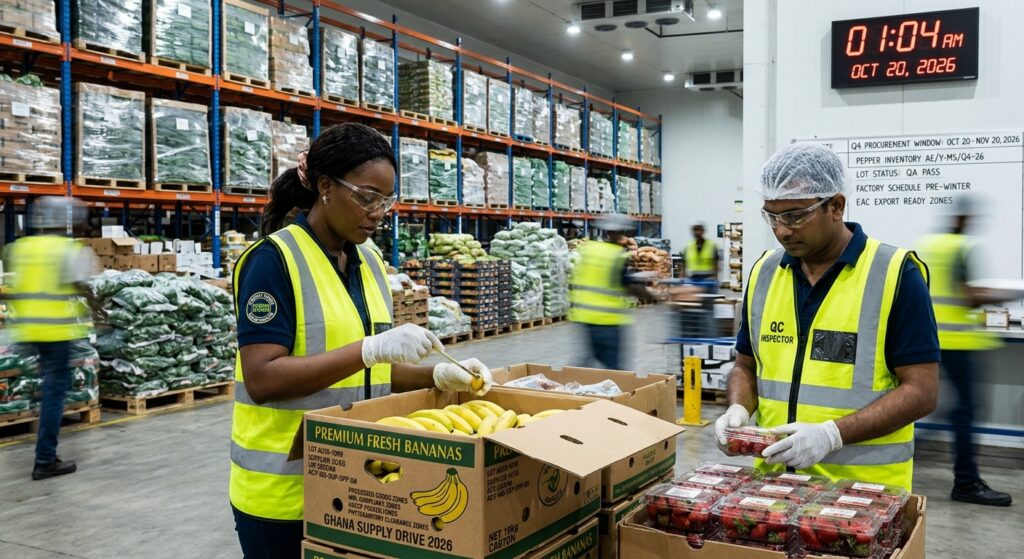
An urgent Ghana Fresh Fruit Supply 2026 procurement window has been officially opened by a major retail conglomerate operating across the Republic of Ghana. This high-priority B2B sourcing drive is establishing ongoing supply contracts specifically for high-quality imported apples, grapes, and bananas, aimed at filling supermarket shelves ahead of the upcoming holiday season and year-end shopping festivals.
The procuring entity is actively expanding its operations and opening new branches specialized in fresh food as part of its strategic growth plan for 2026. This initiative is highly significant as West African retail chains prepare for peak consumption periods. Furthermore, the continued robust growth of Ghana’s middle class has driven an unprecedented demand for premium imported fruits. This consumption trend is verified by periodic reports from the Ghanaian Ministry of Trade and Industry (MOTI) and the African Retail Insight 2026 center. The communication window for this critical operational period is strictly open from October 20, 2026, to November 20, 2026.
Market Dynamics: West Africa’s Premium Fruit Consumption Boom
International fruit exporters, growers, and agricultural trade cooperatives seeking lucrative B2B volume agreements must engage during this defined window to secure allocations with top-tier Ghanaian distributors.
Core Procurement Metrics & Tender Specifications
| Procurement Parameter | B2B Commercial & Technical Details |
| Commodity Varieties | Apples (Granny Smith, Gala); Grapes (Crimson, Thompson); Bananas (Cavendish Class 1) |
| Target Distribution | Retail Supermarket Chains & Intermediate Distributors |
| Market Driver | Growth of Middle Class + Holiday Season Prep + Retail Expansion |
| Operational Window | October 20, 2026 – November 20, 2026 (Urgent Execution) |
| Compliance Framework | GSA Food Safety, Phytosanitary Certificates, FDA Guidelines |
5 Steps to Execute Under the Ghana Fresh Fruit Supply 2026 Tender
To participate successfully, global produce suppliers must align their operations, certifications, and logistics with strict West African import standards.
1. Comply with Ghanaian Food and Drugs Authority (FDA) Standards
Participating in the Ghana Fresh Fruit Supply 2026 tender without logistical delays requires complete alignment with Ghanaian regulatory protocols. Every bulk shipment must carry valid Phytosanitary Certificates, certificates of origin, and safety verification documentation adhering to both Ghanaian FDA and international FDA Guidelines.
2. Verify Fruit Grade, Caliber, and Purity
Ghanaian retail buyers enforce strict physical benchmarks for incoming fruit shipments:
-
Apples & Grapes: High-color coloration (Color Stage 1–2 for transit), precise diameter sizing (caliber), firm pressure readings, and zero mechanical scarring or latex staining.
-
Bananas: Class Extra/Class 1 Cavendish, green and unripened (Stage 1) calibration 39–46, with zero visual defects or crown mold.
3. Ensure Strict Cold-Chain Integrity and Traceability
Maintaining fruit dormancy and preventing premature ripening during maritime transit requires specialized reefer management:
-
Storage Temperature: Multi-chamber reefer containers with precise temperature logs (-1°C to +1°C for apples/grapes; 13.5°C for bananas) and humidity controls.
-
Traceability Protocols: Complete batch tracing from certified farm plots to final ocean packaging facilities, verified via accredited third-party lab Certificates of Analysis (CoA).
4. Deploy Durable, Ventillated Packaging and Palletization
Protecting fresh fruit during West African port handling and automated warehouse entry mandates specialized packaging:
-
Packaging Solutions: Telescopic corrugated cartons (18.14 kg / 40 lb for bananas; specified weights for apples/grapes) with modified atmosphere packaging (MAP).
-
Pallet Standards: Fully corner-boarded and strapped ISPM-15 heat-treated wooden pallets ready for direct entry into high-bay automated distribution warehouses.
5. Finalize B2B Export Contracts Prior to November 20, 2026
Exporter cooperatives, large-scale plantations, and international trade enterprises seeking volume allocations in the West African market must submit packhouse audit reports, lot certificates, and competitive C&F/CIF pricing before the November 20, 2026 cutoff date.
Frequently Asked Questions (B2B Produce Sourcing)
Why is there an urgent demand for fresh fruit in Ghana?
The conclusion of local harvest seasons, freezing temperatures in northern regions, and retail giants enforcing strict just-in-time delivery models have created critical supply deficits ahead of the holiday shopping rush.
What quality certifications are required for exporting fruit to Ghana?
Suppliers must present official Phytosanitary Certificates, Ghanaian FDA import approvals, accredited third-party laboratory CoA reports confirming compliance with Maximum Residue Limits (MRLs), and ISO 22000 or HACCP food safety compliance certificates.
Connect with Verified Buyers and Importers Today
Capitalize on this high-volume commercial opportunity for the Ghana Fresh Fruit Supply 2026 program before the emergency procurement window closes on November 20, 2026. Register on Globtrade to access direct buyer RFQs, submit export tenders, and secure long-term supply agreements with accredited Ghanaian retail distributors.
Register with Globtrade to Connect with the Importer Now
💬 Do you need immediate assistance regarding the details of the export opportunity? Contact the GlobTrade support team via WhatsApp.

